
 /Cinny



Posts
21116Following
432Followers
797pfp by https://www.furaffinity.net/user/wuta-tumaki
lotte adds rac- to words a lot but it doesn’t alter meaning
NSFW posts are not for minors (they will be blocked on sight).
Opinions expressed in this profile are representative of those of your employer.
“u are my favorite therianizing biohazard” — @sodiboo@gaysex.cloud
“you know, maybe i will finally learn to read the content warning before clicking 'view' [—] thanks for this lesson @charlotte” — @ariadne@social.treehouse.systems

Charlotte /Cinny
charlotte
@novenary @usernameswift @coolbean @rose my guess is that 6G is going to be like 5G, where it really only matters in very dense urban areas
 1
1
 0
0
 1
1
Charlotte /Cinny
charlotte
@rose @novenary @usernameswift @coolbean mobile network-connected devices to this day are built to support it, so it would affect every device.
infrastructure improvements are built according to demand, of which there is largely none in huge swaths of uninhabited land without legal incentives.
shutting down 2g would leave already underserved communities completely without access to mobile telephony and mobile internet in addition of cutting off uninhabited areas too. it would be challenging to cover with modern infrastructure, and completely impossible with current capitalist incentives. (instead we get not just 3 but 4 independent network providers building in the same populated areas)
it might be okay to shut it down locally i suppose, in densely populated areas where the added capacity would benefit.
also no there are a bunch of regulatory hurdles to building your own cell network. especially once it has been shut down and the frequency assignment has been absorbed by 4G and 5G. it is also not possible to do it with just a rpi since it requires special hardware
0
0
2
Charlotte /Cinny
charlotte
@rose @novenary @usernameswift @coolbean there is a 30 year long tail of devices that do, but i don’t know how much relies on 2G data
1
0
2
Charlotte /Cinny
charlotte
@novenary @usernameswift @coolbean @rose emergency telephony needs 2g too under certain conditions, so do all calls when connected to 2g or 3g (and 4g and 5g if volte/vonr is broken/unsupported) 2g also has a much larger range compared to newer standards which does matter quite a bit if you are in the middle of nowhere and need help
1
0
3
Charlotte /Cinny
charlotte

@cardboard so like basically, all living (or formerly living) things contain significant amounts of carbon.
this carbon exists in multiple variants, that weigh different amounts.
there is a very small amount of comparatively heavy and radioactive carbon all around us. the percentage of it stays relatively constant for living things due to eating, breathing, pooping, shedding, etc
however once you die, you no longer exchange carbon with the environment. the radioactive carbon in your body will decay slowly over time, meaning it will become less
accelerator mass spectrometry can measure the mass of the carbon. the idea is basically “if you throw a heavy ball and a light ball with the same strength, the heavy ball will land closer to you than the light ball”. by doing this to the carbon in the sample, you can determine how much of the radioactive carbon is in there, and estimate how old it is
1
0
0
Charlotte /Cinny
charlotte
aromantic person bringing an accelerator mass spectrometer to their date because they want to do carbon dating
1
0
3
/Cinny
repeated
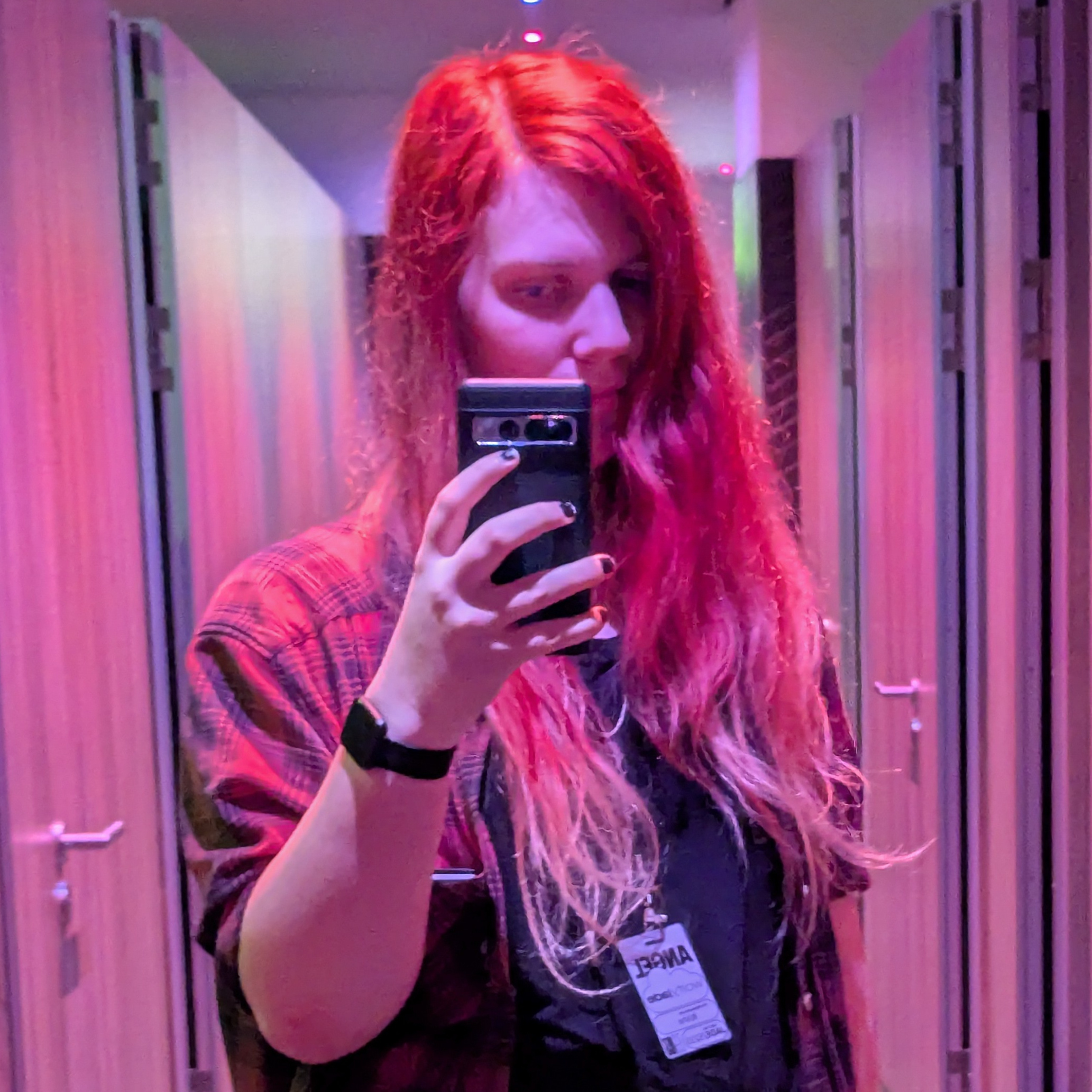
jade arson.
awoo@gts.apicrim.esunexpected designations in autocompletion 
 1
3
2
1
3
2
Charlotte /Cinny
charlotte
0
0
1
Charlotte /Cinny
charlotte
1
1
1
Charlotte /Cinny
charlotte
Show content
0
1
1
Charlotte /Cinny
charlotte
Show content
2
0
1