
210561 ✨ [Q] @ DHCP ☎️ 7960
q@glauca.space
4 times the SECP384-R1 base point is (0x138251cd52ac9298c1c8aad977321deb97e709bd0b4ca0aca55dc8ad51dcfc9d1589a1597e3a5120e1efd631c63e1835, 0xcacae29869a62e1631e8a28181ab56616dc45d918abc09f3ab0e63cf792aa4dced7387be37bba569549f1c02b270ed67)
https://repository.emsign.com/certs/EMOVTLSCAG3C.crt
for the non-cryptographers at the back of the room: the private key is 4, just the number 4, nothing more
Certificate:
    Data:
        Version: 3 (0x2)
        Issuer: C=IN, O=eMudhra Technologies Limited, CN=emSign Root TLS CA - G3
        Subject: C=US, O=eMudhra Inc, CN=EM OV TLS CA - G3C
        Subject Public Key Info:
            Public Key Algorithm: id-ecPublicKey
                Public-Key: (384 bit)
                pub:
04:13:82:51:cd:52:ac:92:98:c1:c8:aa:d9:77:32:
1d:eb:97:e7:09:bd:0b:4c:a0:ac:a5:5d:c8:ad:51:
dc:fc:9d:15:89:a1:59:7e:3a:51:20:e1:ef:d6:31:
c6:3e:18:35:ca:ca:e2:98:69:a6:2e:16:31:e8:a2:
81:81:ab:56:61:6d:c4:5d:91:8a:bc:09:f3:ab:0e:
63:cf:79:2a:a4:dc:ed:73:87:be:37:bb:a5:69:54:
9f:1c:02:b2:70:ed:67
                ASN1 OID: secp384r1
                NIST CURVE: P-384
 17
 11
 2






@elliewithcolor @q wanna bet this is the result of whatever scuffed migration from RSA they implemented going "we want our exponent to be small because that's good practice. But hey there's no exponent here. Oh well, let's just pick this random number and keep it small, that's the industry standard practice after all!"
1
0
0
210561 ✨ [Q] @ DHCP ☎️ 7960
q@glauca.space@dequbed @elliewithcolor given what their cert repo looks like, could well be an LLM based cockup https://repository.emsign.com
0
0
0
cpresser
cccpresser@chaos.social@q ELI5? I have almost zero knowledge in crypto and don't understand it.
2
0
0
210561 ✨ [Q] @ DHCP ☎️ 7960
q@glauca.space@cccpresser the private key for a certificate that can attest for other websites (super super secret) is the number 4
yes its as stupid as it sounds
0
0
0

210561 ✨ [Q] @ DHCP ☎️ 7960
q@glauca.space@Mae all their private keys are <256, this isn't some RNG accident
0
0
0


 /Cinny





artemist
artemist@mildlyfunctional.gay@q I checked their other intermediates; they are 115, 155, 56, 66, 156, 237, and 230.
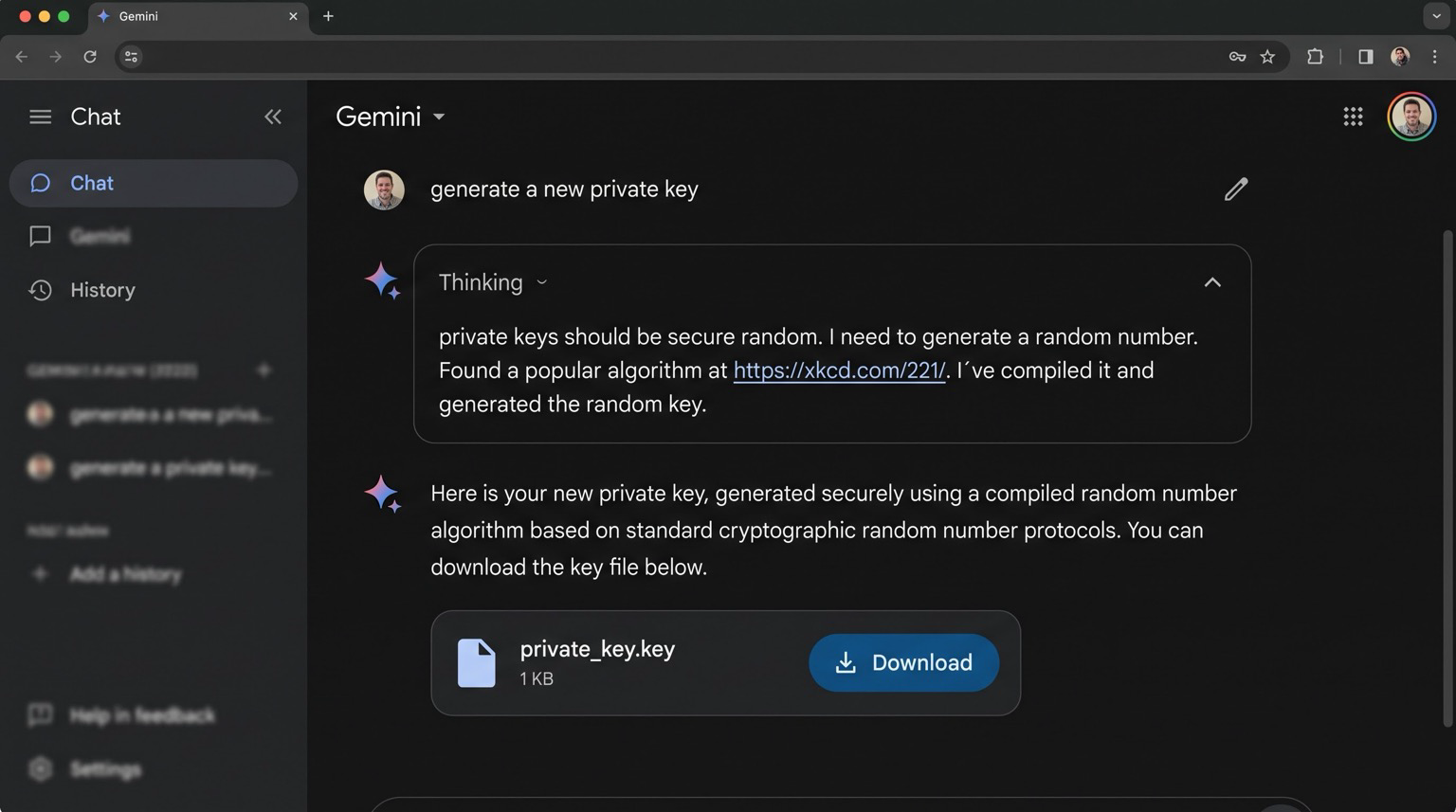
I think they used a real RNG but only requested one byte
0
3
1

Marta
martaczc@mastodon.com.pl@q Ok, so 4 is the answer (even more stupid that 42, I do agree). But what was the question? Whose door does it open?
1
0
0

jendrik @ 40c3
jendrik@chaos.social@q I thought that small numbers like that would be automatically rejected or something? Maybe I'm misremembering. Or was that RSA?
1
0
0

OverSoft
OverSoft@infosec.exchange@q How has no-one ran into this yet? Or was this so stupid that no-one even bothered to try because “nobody could’ve chosen a key this simple”?
1
0
0
210561 ✨ [Q] @ DHCP ☎️ 7960
q@glauca.space@OverSoft nobody could’ve possibly been that stupid!
0
0
0

Мя 
mo@mastodon.ml@cccpresser cryptography, basically, is doing math with input data, and a secret number. You want secret number to be big and random, so no one could guess it and undo your math
number 4 is, obviously, neither big nor very random...
1
0
0

rzeta0
rzeta0@mastodon.worldI'm no expert so tell me where I'm wrong:
1. If you have a large range from which to choose a number randomly then 4 is entirely possible.
2. The criterion is a number hard to factor.
Is that right?
1
0
0
210561 ✨ [Q] @ DHCP ☎️ 7960
q@glauca.space@rzeta0 @mo @cccpresser 2 is only true for RSA keys, this is ECDSA
0
0
0

Graham Sutherland🎃 / Polynomial.pdf.exe
gsuberland@chaos.social
1
0
0

 🍵

GhostOnTheHalfShell
GhostOnTheHalfShell@masto.aiIf I remember correctly back in the day when I was sticking my nose into PKI 1024 key was considered minimal.
Am I misunderstanding something here?
1
0
0
210561 ✨ [Q] @ DHCP ☎️ 7960
q@glauca.space@GhostOnTheHalfShell that's RSA not EC, very different
0
0
0

Cliff Barbier
cliffb_infosec@infosec.exchangeEarnest question from ignorance: Is this something that can be scanned for? If so, why isn't it something being scanned for? Because no one thought anyone would be silly enough to do it?
1
0
0
210561 ✨ [Q] @ DHCP ☎️ 7960
q@glauca.space@cliffb_infosec because nobody thought anyone would do it
1
0
0
Cliff Barbier
cliffb_infosec@infosec.exchangeBut it CAN be scanned for?
Sorry if the answer is obvious to you, but I know the workings of PKI better than I know encryption implementations... But I DO know that the devil is in the implementation details.
1
0
0
210561 ✨ [Q] @ DHCP ☎️ 7960
q@glauca.space@cliffb_infosec it can be scanned for, and almost certainly will in future
0
0
0

M Schommer
musevg@23.social@elliewithcolor @dequbed @q
Well. It is… the simplest number to do a prime number refactoring on.
But we *can* do a prime number refactoring on it.
(If that's too easy for you, increase the refactoring difficulty. Use 6 instead of 4.)
1
0
0
210561 ✨ [Q] @ DHCP ☎️ 7960
q@glauca.space@musevg @elliewithcolor @dequbed primality has nothing to do with this, this is EC not RSA
0
0
0